
Our Location
Le-Pelle
1511 Locust St
Walnut Creek
CA 94596
Directions & reviews on Google ›
Hours
Sun – Fri: 9:30am – 6pm
Sat: Closed
Mail: lepelle.site@gmail.com
Phone: (925) 476-5343
Get in Touch




Autumn is the repair window: sun exposure drops, which makes it the right time for chemical peels and microneedling. Winter calls for hydration and barrier support rather than stripping treatments. Spring suits deep cleansing to clear what built up over the colder months. Summer is mostly about what not to book, because resurfacing raises sun sensitivity when UV is at its highest. Le-Pelle plans treatment calendars around East Bay conditions for clients across Walnut Creek and the Diablo Valley.
Most people book a facial when their skin annoys them. That works, but it means treatment always arrives after the damage, and some of the most effective treatments are the ones that are wrong for the time of year you finally get around to them.
There is a better way to sequence it. Certain treatments belong to certain months, and the reason has nothing to do with marketing. It comes down to sun exposure, humidity, and what your skin is already dealing with.
We have written separately about why the East Bay climate is hard on skin. This is the practical companion to it: what to book, and when.
This is the most useful stretch of the year and the most commonly wasted.
Summer here means long dry days and a lot of accumulated exposure, whether or not you spent it outdoors deliberately. What shows up in September is thickened surface texture, uneven tone, and pigment that was not there in May.
Autumn is when you can finally treat that, because the intensity of the sun is dropping and skin that has just been resurfaced needs exactly that. A chemical peel is the obvious tool. Glycolic acid clears sun damaged surface cells and brightens what is underneath. Expect some redness and flaking afterwards, which is the renewal happening rather than a complication, and which is far easier to plan around in October than in July.
If pigment rather than texture is the issue, treating sun damage and age spots also belongs in this window for the same reason, and so does melasma, which reacts badly to heat and is easier to manage out of season.
Cold air holds less moisture, and indoor heating holds almost none. Skin loses water to the air faster than it can replace it, which is why the same routine that worked in August suddenly leaves your face tight by December.
The instinct is to exfoliate harder, because dry skin feels rough. That is the wrong move. Roughness in winter is usually a barrier that has run out of water, and taking another layer off makes the problem worse.
Winter treatments should add rather than remove. Hydrodermabrasion clears congestion and hydrates in the same pass, which suits skin that needs a clean without a stripping. If you have seen it set against a HydraFacial, the difference between the two is worth knowing. Gold is worth considering if your skin has turned reactive and flushed, because it calms rather than provokes. Persistent redness is a different problem and needs its own plan, and what a gold facial actually does is worth reading before you book one. Collagen treatment fits a season where the goal is supporting structure rather than making a correction.
Months of heavier creams, less daylight and low humidity leave skin congested and dull. Pores that coped fine in September are blocked by March.
This is the season for a proper clean. A deep cleansing facial with professional extractions clears what has accumulated, and it is worth having done properly rather than attempted at home, because pressure applied to an unprepared pore pushes contents sideways into the surrounding tissue instead of clearing them upward.
Microdermabrasion handles the dullness, taking off the dead surface layer that has been building since autumn and leaving a base that actually reflects light again.
Spring is also a sensible time to start a course of needling if structural work is on your list, because you want the sessions and the recovery finished before the sun gets strong.
This is the part nobody tells you, and it is the most useful thing on this page.
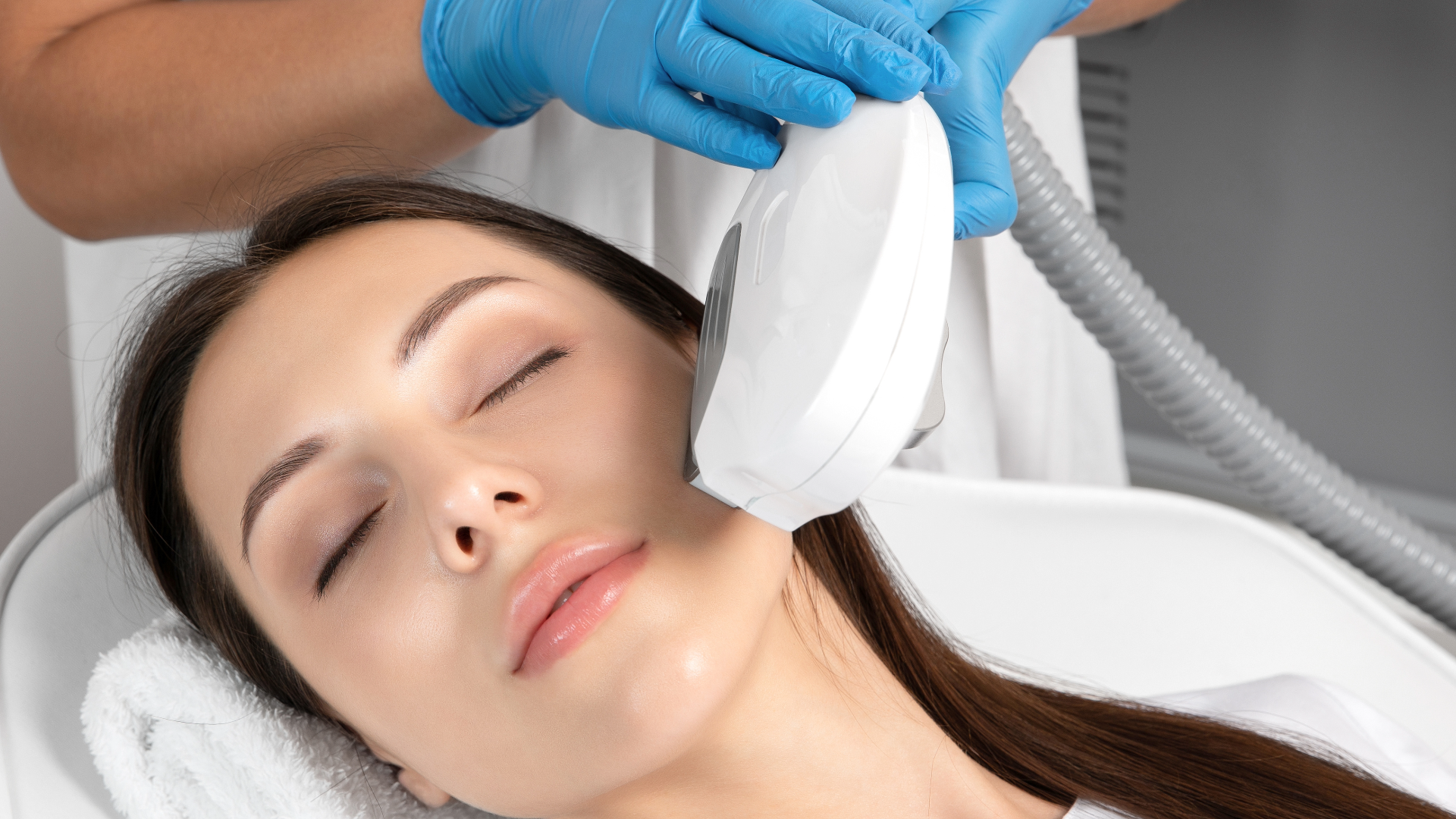
Resurfacing and light based treatments do not mix with sun exposure. A peel removes the layer that was absorbing UV for you. IPL targets pigment, and skin that has recently tanned reads as pigment. Booking either in the middle of a bright stretch is how people end up with darker marks than the ones they were treating.
None of this means avoiding treatment in summer. It means choosing the ones that do not compromise your defenses. Hydration, calming treatments and gentle cleansing all work perfectly well in July. Save the resurfacing for autumn, which is where it was always going to work best anyway.
Not four times, no. Twice is enough for most people, once going into the dry cold and once coming out of the sun. What matters is that the routine changes at all, because skin that gets treated identically in January and July is being treated correctly in neither.
It is possible with a lighter peel and genuine commitment to sun protection, but we will usually suggest waiting. The result is better in autumn and the risk is lower. If there is a reason it cannot wait, tell us and we will work out what is safe.
That is useful information rather than a nuisance. Skin that breaks out every winter and is fine in summer is telling you the problem is barrier related, not oil related. Skin that congests in summer is telling you the opposite. Bring the pattern to a consultation, because it usually shortens the diagnosis considerably.
Hydration and barrier support never go out of season. Everything with a resurfacing or light based component has a right time, and autumn through early spring is generally it.
The pattern is simple enough to hold in your head. Repair in autumn. Protect in winter. Clear in spring. Maintain in summer and leave the aggressive work alone.
Where it gets specific is your skin, which has its own history and its own reactions. Book a consultation and we will map the year around what your skin actually does rather than around a general rule, or look through the treatments first if you want to see the options.
Le-Pelle
1511 Locust St
Walnut Creek
CA 94596
Directions & reviews on Google ›
Hours
Sun – Fri: 9:30am – 6pm
Sat: Closed
Mail: lepelle.site@gmail.com
Phone: (925) 476-5343

 What to Know Before Your First Chemical Peel