
locations
Le-Pelle
1511 Locust St
Walnut Creek
CA 94596
Tahoe natural Beauty
4101 Lake Tahoe blvd
South Lake Tahoe
CA, 96150
Free consultation



Sun damage responds well to treatment, which is the good news. Before any of that though, there is one thing to check, because not every spot on your skin is a cosmetic problem and the difference matters more than anything else on this page.
Most of the marks people want removed are solar lentigines, the flat brown spots that turn up on the face, chest, shoulders and backs of the hands. They are harmless, they are caused by sun exposure rather than by age despite the name, and they respond well to treatment.
But some spots are not that. If anything on your skin is new, changing in size, shape or colour, irregular at the edges, itching, bleeding or crusting over, see a doctor before you see us or anybody else. Treating a lesion cosmetically can disguise something that needed diagnosing. If you are unsure, that counts as a reason to get it looked at. We will say the same thing at your consultation, and we would rather send you away than treat something we should not.
With that dealt with, here is how sun damage actually works. It is cumulative. The spots surfacing on your face now were earned over decades, which is why people reach their forties and appear to develop a lifetime of holidays all at once. Nothing suddenly went wrong. The damage was already there and has become visible.
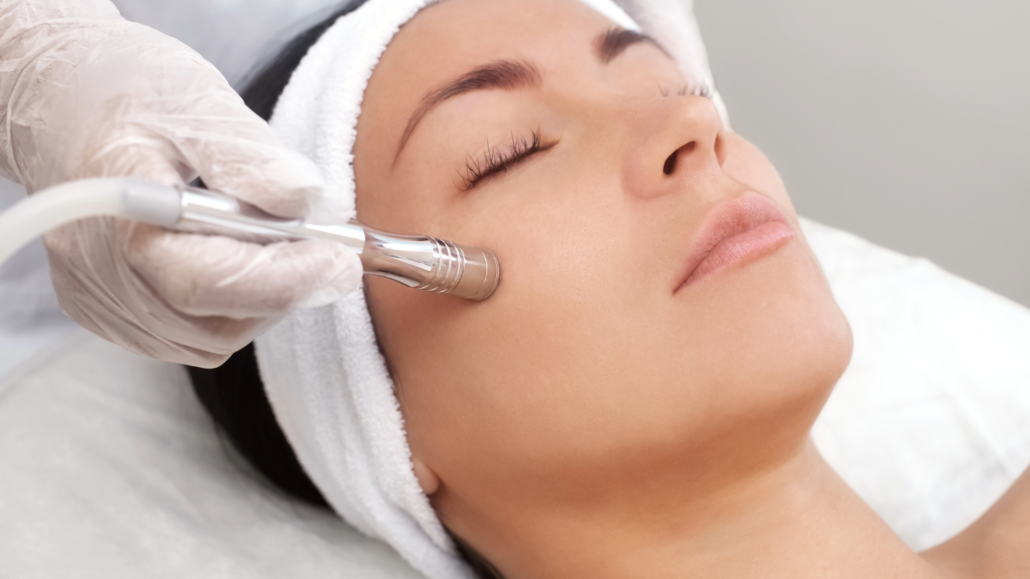
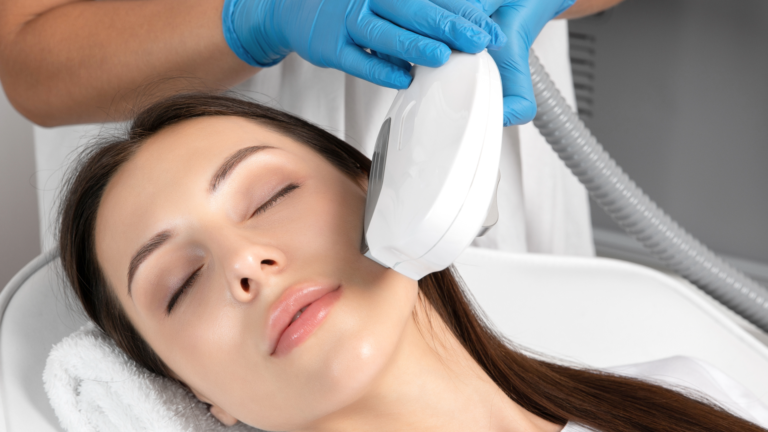
Treatment can clear a great deal of it. Light-based treatment breaks up distinct pigment spots, peels improve overall tone and the roughened texture that comes with photodamage, and gentler resurfacing handles the milder end. All of that genuinely works.
And here is the condition attached to it. None of it holds unless you protect your skin daily afterwards. Sun damage treatment without sunscreen is paying to empty a bucket with a hole in it, and we will keep saying that until it sounds boring, because it is the difference between a result that lasts years and one that lasts a season.
Anything that needs a doctor gets referred rather than treated.
Distinct pigment spots respond well to targeted light-based treatment.
Blotchiness and general photodamage improve across a course.
Sun-roughened skin softens as the surface is resurfaced.
Sent to light, peels or gentler resurfacing depending on your skin, not on a package.
You leave knowing how to keep the result rather than repeating the treatment yearly.
Start with a free consultation and we map out the plan that suits your goals.
We look at the spots properly and separate what is cosmetic from anything that should be seen by a doctor. Then we work out what kind of damage you have, because distinct spots, uneven tone and roughened texture respond to different treatments, and we take your skin tone into account because it changes what is safe. You leave with a route and a protection plan rather than a package.
Recovery depends on which treatment we recommend, so the detail sits on the relevant page and comes up at your consultation. What applies across all of them: results build over weeks as pigment clears, spots commonly darken before they fade, and a course usually beats a single session. The long-term picture is that sun damage keeps surfacing from exposure you already had, so occasional top-ups are normal. What decides whether you need those every few years or every year is entirely how consistently you protect your skin in between.
Get it checked if it is new, if it has changed in size, shape or colour, if the edges are irregular, if it itches, bleeds or crusts over, or if you simply are not sure. Uncertainty is a good enough reason. Treating a lesion cosmetically can hide something that needed diagnosing, which is why we will refer rather than treat if there is any doubt.
It has not, it has surfaced. Sun damage accumulates over decades before it becomes visible, so the spots arriving on your face now were caused by exposure years and often decades ago. It is why the change seems abrupt in your forties. Nothing has gone wrong recently.
For distinct brown spots, light-based treatment is the most direct route, because it targets the pigment specifically. For general blotchiness and the roughened texture that comes with sun damage, a chemical peel does more. Milder cases do well with gentler resurfacing. Which one suits you depends on what your skin is actually showing, and that is what the consultation is for.
The ones treated are gone, but new ones surface from damage you already have, and any further sun exposure adds more. Daily protection is what keeps that to a slow trickle instead of a yearly return. Without it you will be back sooner and paying again for the same result.
Usually yes, after light-based treatment, and it catches people out. The pigment lifts toward the surface and looks more obvious for a while before it clears. It is expected. Your specialist will tell you what timeline to expect for your skin.
It is not the best plan. Light-based treatment cannot be done safely on recently tanned or sun-exposed skin, and the aftercare requires staying out of the sun while your skin settles. Autumn and winter are the sensible seasons for this, which is also when clinics are quieter.
It can be, with proper assessment rather than a standard setting. Light-based treatment of pigment carries different risks across skin tones, including post-inflammatory pigmentation. Anywhere treating every skin tone the same way is not assessing you properly, and for some presentations a peel or a gentler route is the better choice.
Book a free consultation and take the first step toward healthier, more confident skin.
Le-Pelle
1511 Locust St
Walnut Creek
CA 94596
Tahoe natural Beauty
4101 Lake Tahoe blvd
South Lake Tahoe
CA, 96150